


The Art of Knit
The Geometry
of Knit
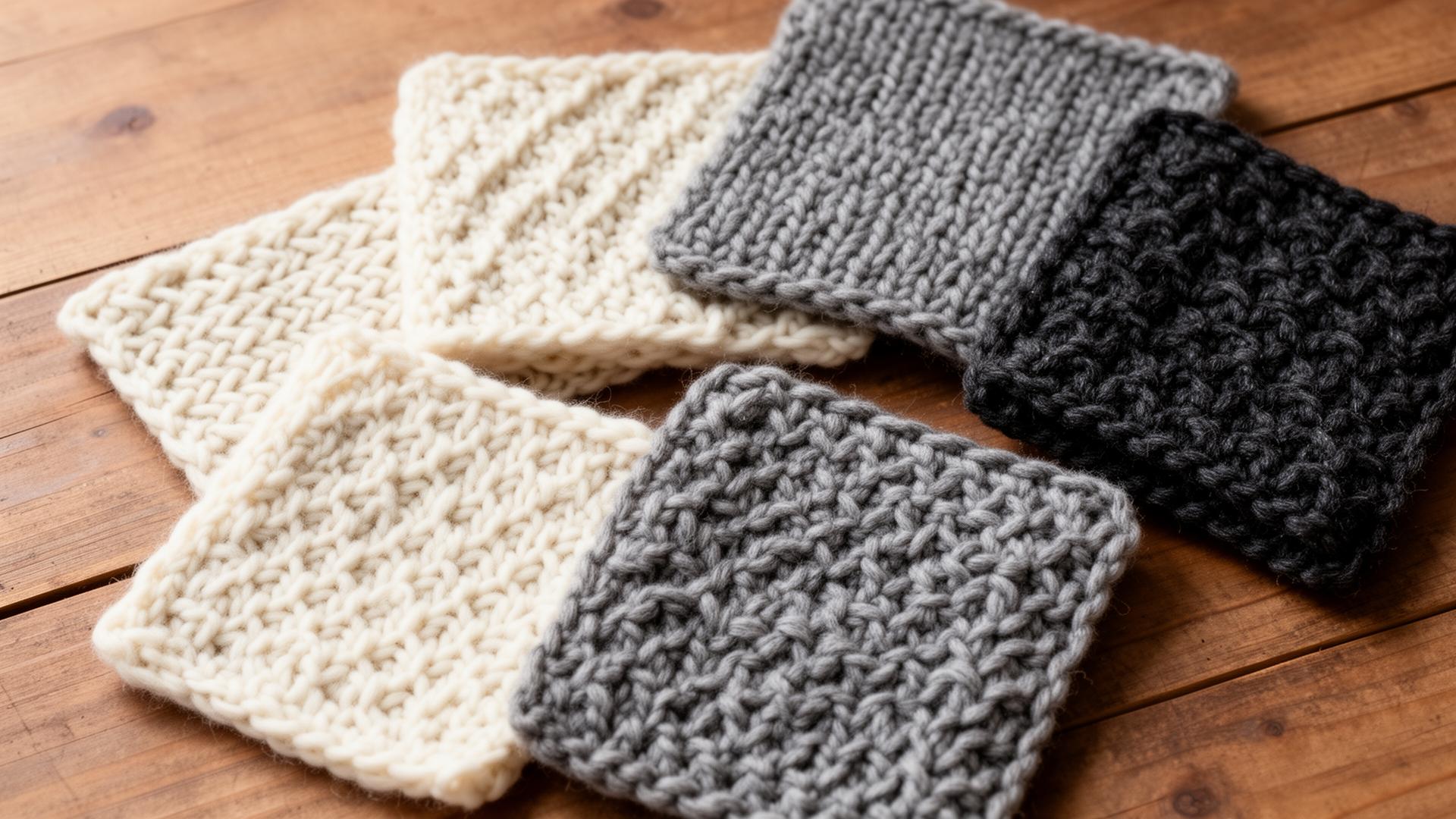
Every knitted garment begins with a single loop. But the way that loop interlocks with its neighbours — the angle, the tension, the direction — determines everything: drape, stretch, warmth, structure. This is the geometry that separates a limp tee from a sculpted blazer.
We spend more time choosing our knit structures than most brands spend designing entire collections. Here's why — and what each stitch actually does.
Jersey Knit
a.k.a. Stockinette / Single Jersey
The foundation of almost all knitwear. Every loop faces the same direction, creating the signature V-pattern on the face and a bumpy reverse. It's the simplest structure — and the most versatile.
Jersey has a natural curl at its edges — a property that frustrated knitters for centuries but that modern designers now use as a deliberate detail. The curl occurs because the face and back stitches have different tensions, pulling the fabric towards itself.
"The name 'jersey' comes from the Island of Jersey in the English Channel, where fishermen's wives knitted garments from local wool as early as the 15th century. Elizabeth I ordered her own stockings from there — and the stitch took the island's name forever."
Stitch diagram
Jersey / Stockinette — V-loops interlocking in one direction
Rib Knit
1×1 Rib · 2×2 Rib · Half-Cardigan
Stitch diagram
Rib Knit — alternating knit & purl columns create stretch
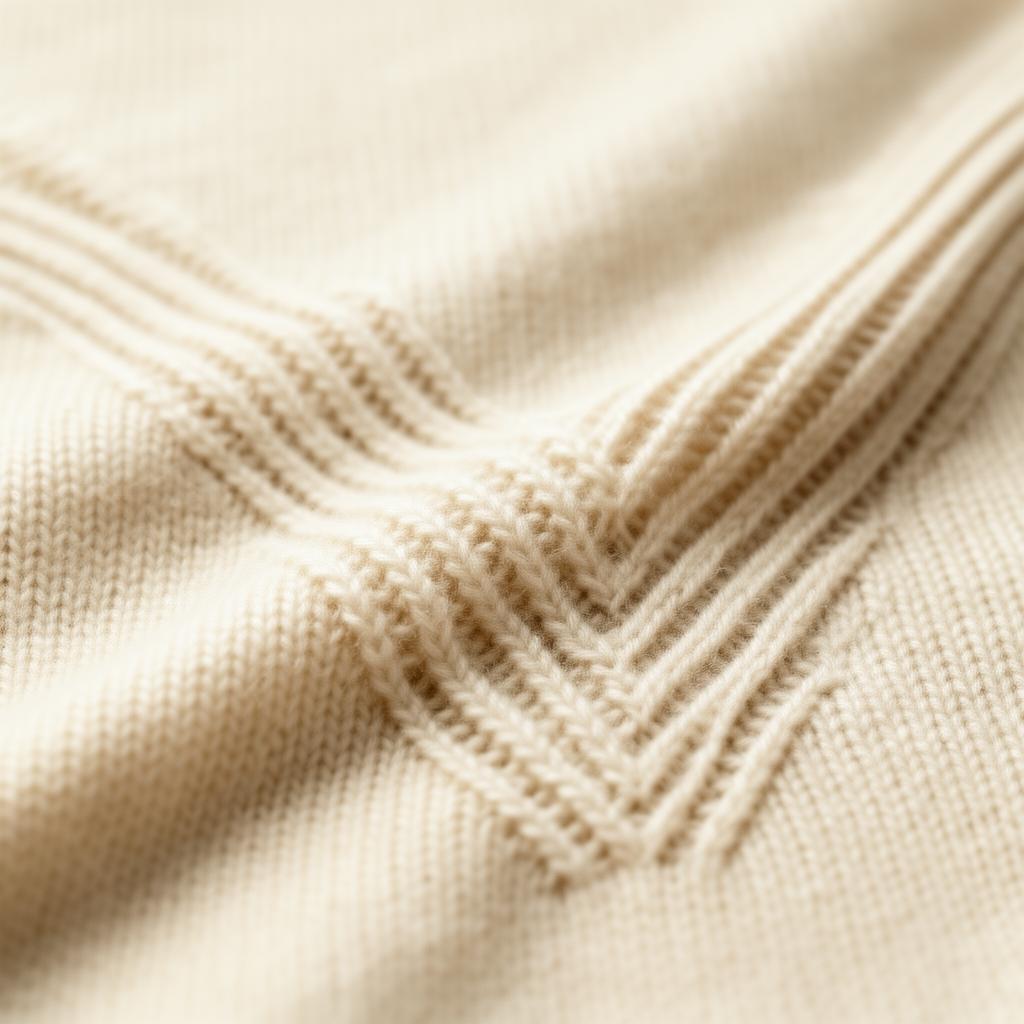
Ribbing is the elastic architecture of knitwear. By alternating knit and purl columns, the fabric naturally wants to compress — and springs back when released. This is why every well-made cuff, collar, and waistband uses rib construction.
The ratio matters: 1×1 rib (one knit, one purl) is thinner and more elastic; 2×2 is chunkier with more pronounced texture. Half-cardigan rib — where every other row tucks instead of knitting — adds loft without weight, creating a fabric that feels substantial yet breathable.
"William Lee invented the stocking frame in 1589 — the first knitting machine. But it could only produce flat jersey. Ribbing had to be added by hand for another three centuries before machines caught up."
Milano Stitch
Milano Rib · Ponte Roma · Double Knit
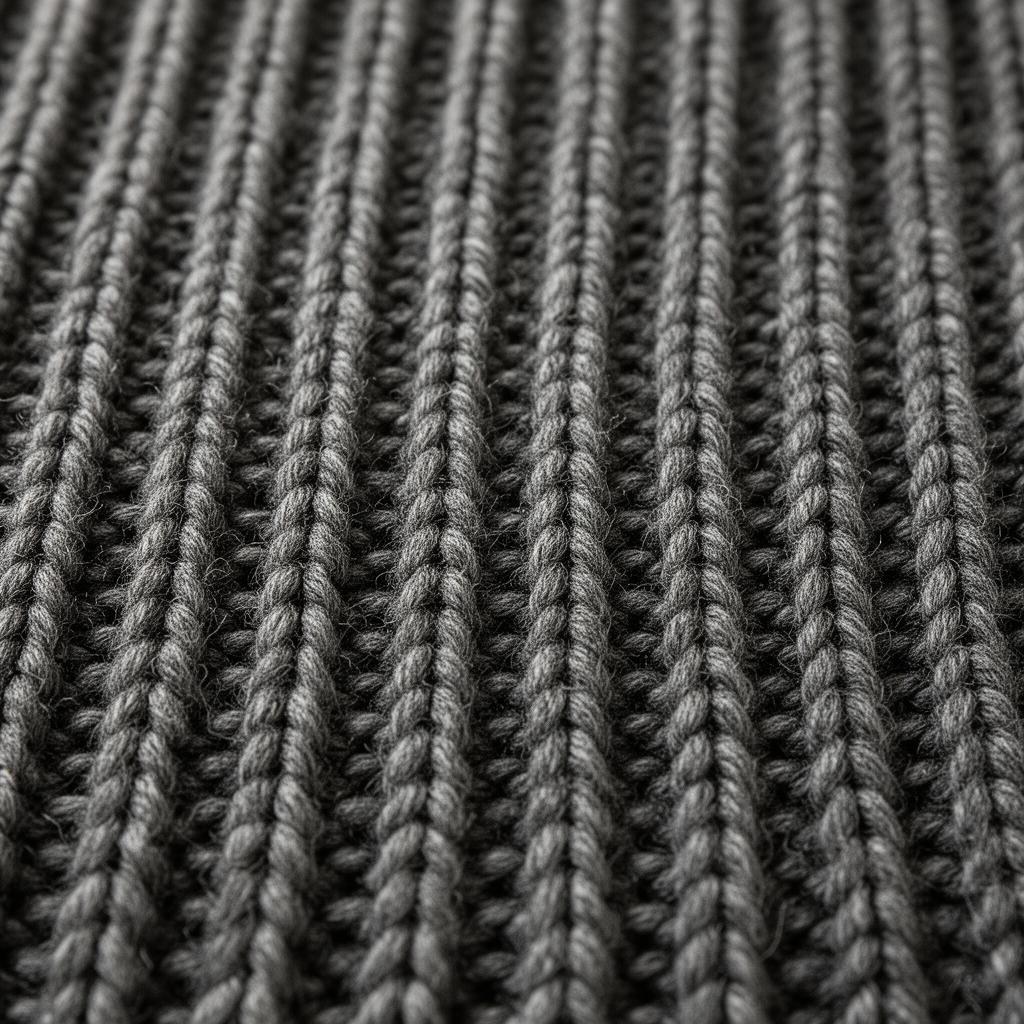
The Milano stitch is where knitwear meets tailoring. Developed by Milanese textile mills in the mid-20th century, this double-bed construction uses a specific sequence: two courses on the face bed, one on the reverse. The result is a fabric with the smooth surface of jersey but the dimensional stability of woven cloth.
It doesn't curl, it barely stretches, and it holds a clean line. This is the stitch that made knitted blazers and structured cardigans possible — fabric that could be cut and sewn like cloth while still being knitted from a single yarn.
"The Milano stitch bridged an ancient divide. For centuries, knitting meant comfort and weaving meant structure. Milano gave knitters both — and the Italian fashion industry never looked back."
Stitch diagram
Milano — double-bed knit: 2 face courses, 1 reverse
Stitch Explorer
Compare the properties, construction, and history of each fundamental stitch type.
Jersey Knit
Stockinette / Single Jersey
The name 'jersey' comes from the Island of Jersey in the English Channel, where fishermen's wives knitted garments from local wool as early as the 15th century. The island became so famous for its knitted goods that Elizabeth I ordered her own stockings from there — and the stitch took the island's name forever.
Colour in Knit
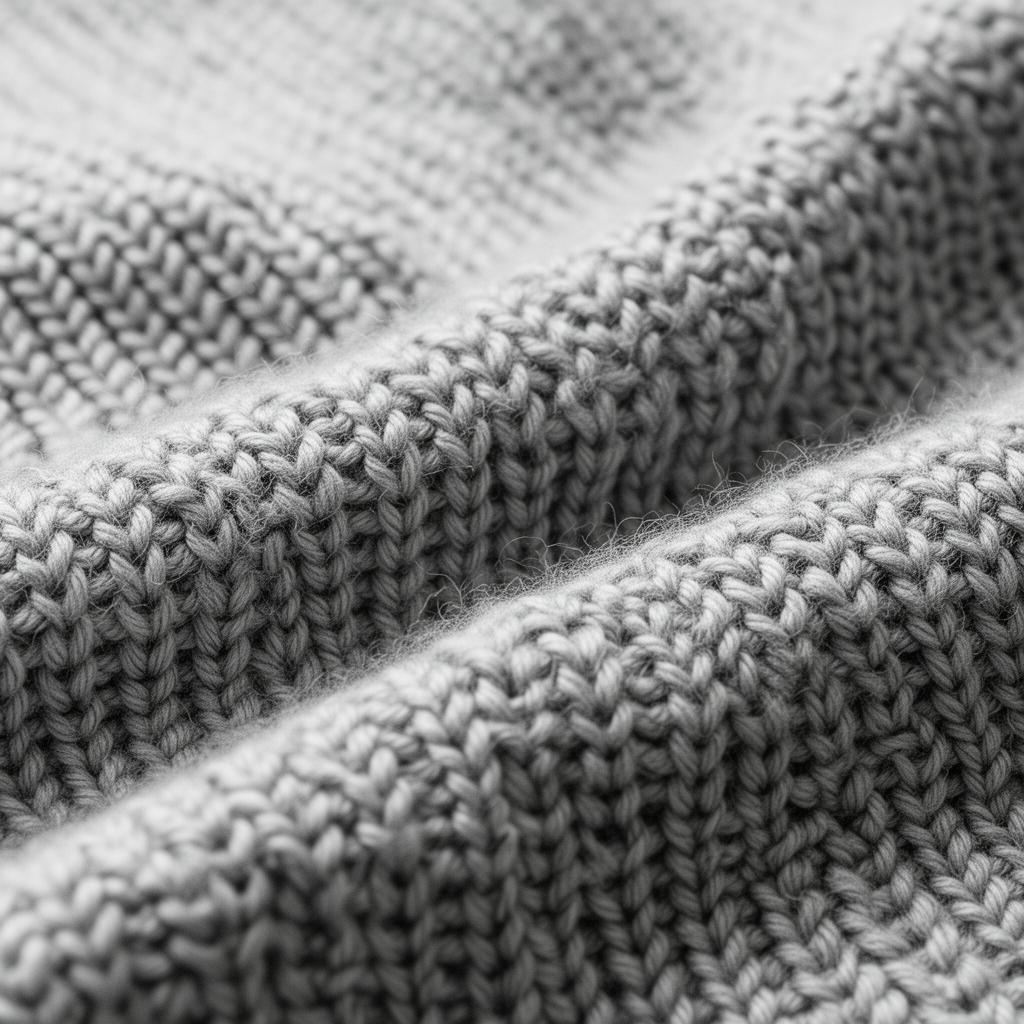
There are two fundamentally different ways to introduce colour into a knitted fabric. One carries the unused yarn behind the work. The other doesn't. This distinction shapes everything from weight to drape to pattern complexity.
Jacquard
a.k.a. Fair Isle · Stranded Colourwork
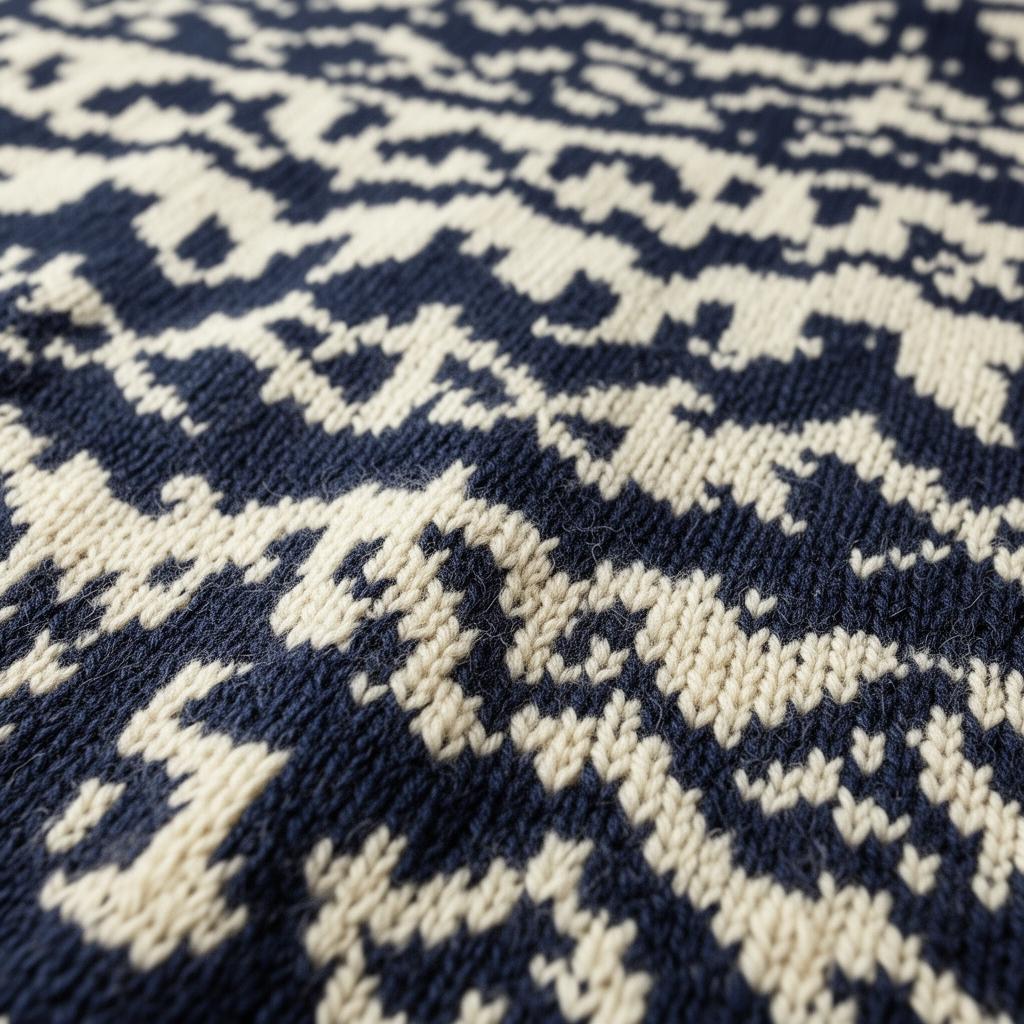
In jacquard, two or more yarns are used in every row, but only one appears on the face at any given point. The unused yarn is "floated" behind the fabric — carried horizontally until it's needed again. This creates a double-thick fabric with natural insulation properties.
The technique limits practical pattern width: floats longer than 5–7 stitches tend to snag. That's why traditional Fair Isle patterns use small, repeating geometric motifs — a design constraint born from engineering.
"Joseph Marie Jacquard invented his programmable loom in Lyon in 1804 — using punch cards to control which threads rose and fell. It's often called the first computer program. Charles Babbage kept a portrait of Jacquard, woven in silk by one of his own looms, hanging in his study."
How jacquard works
How intarsia works
○ = yarn twist / join point — no floats on back
Intarsia
Block Colour · Picture Knitting
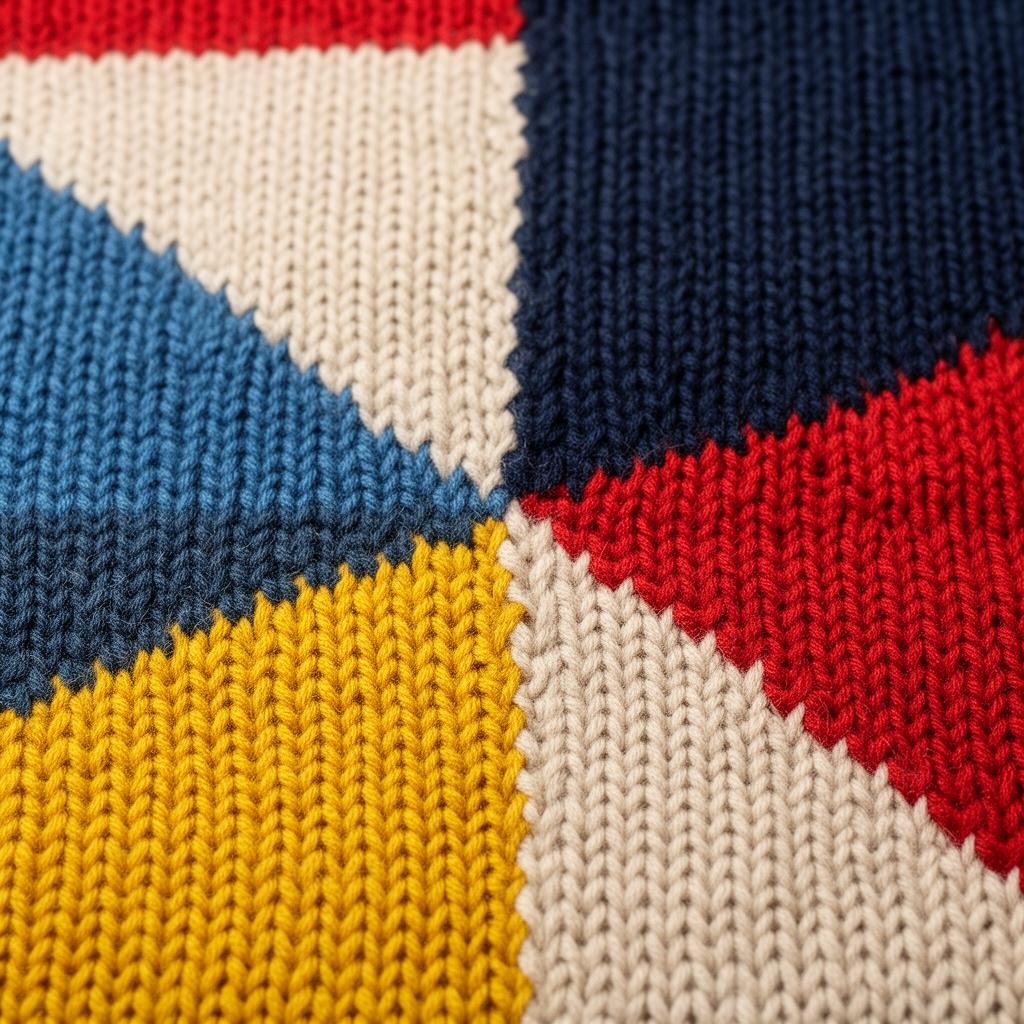
Intarsia is the opposite approach. Instead of carrying multiple yarns across the entire row, each colour block has its own separate ball of yarn. Where two colours meet, the yarns twist around each other to prevent holes — but neither is carried behind the other.
The result is a single-thickness fabric that can have enormous colour blocks — logos, landscapes, abstract shapes — without the bulk or stiffness of jacquard's floats. The trade-off: it's fiendishly complex to execute, requiring a separate yarn bobbin for every colour change.
"The word 'intarsia' comes from the Italian art of inlaying wood — 'intarsiare,' to inlay. Renaissance craftsmen in Siena and Florence created elaborate pictorial panels by fitting contrasting wood pieces together. When knitters adopted the same principle of fitting colour blocks without overlap, they borrowed the name."
A Brief History of the Stitch
Earliest knitted fragments
Coptic socks found in Egyptian tombs show sophisticated colourwork using a single-needle technique called nålbinding — a precursor to true knitting.
Two-needle knitting emerges
Islamic craftsmen in the Middle East develop true two-needle knitting. The skill spreads along trade routes to Spain, then through Europe.
William Lee's stocking frame
The English clergyman invents the first knitting machine. Queen Elizabeth I refuses him a patent, fearing it would put hand-knitters out of work.
Jacquard's punch-card loom
Joseph Marie Jacquard's programmable loom in Lyon revolutionises patterned textiles and inspires the concept of computer programming.
Circular knitting machines
The invention of circular knitting machines enables seamless tubular fabrics — the ancestor of today's T-shirt construction.
Fair Isle enters fashion
The Prince of Wales wears a Fair Isle pullover to play golf at St Andrews. The pattern explodes into mainstream fashion overnight.
Milano stitch perfected
Italian mills develop the Milano rib for structured knitwear, bridging the gap between knitting and tailoring.
Whole-garment knitting
3D knitting machines produce complete garments with zero waste — the geometry of knit reaches its most precise expression yet.
Every stitch is a decision. A jersey loop chooses lightness. A rib column chooses elasticity. A Milano course chooses structure. Together, they are the invisible geometry that shapes how a garment moves, breathes, and ages.
We don't just pick a stitch. We engineer the feel.
End
